
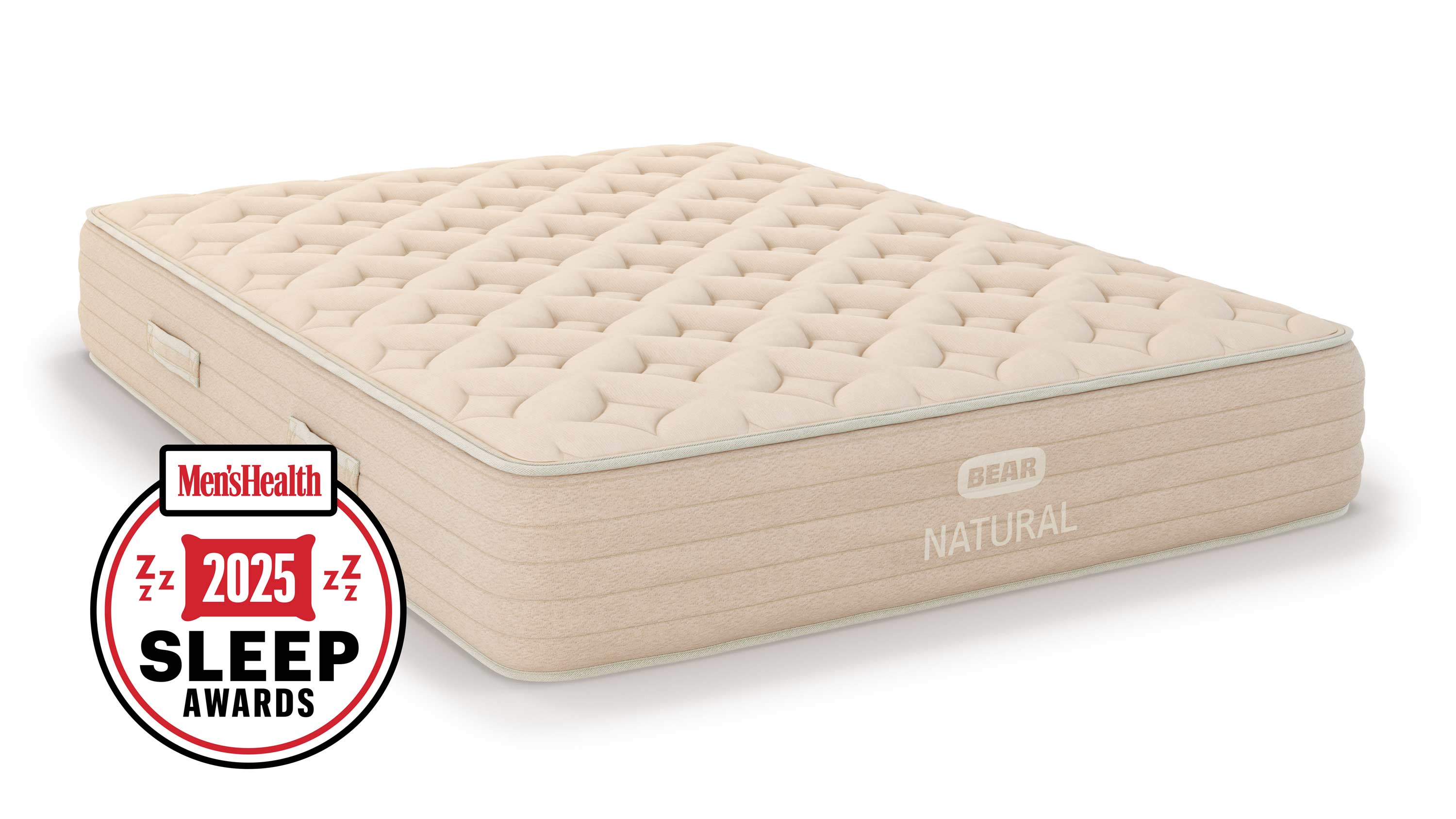


Mattress edge support describes how well a mattress resists compression and maintains stability when weight is placed near its perimeter. In practical terms, good edge support helps the sides of your mattress feel secure whether you're sleeping near the edge, sitting down to put on your shoes, or getting out of bed in the morning.
Edge support can also affect how much of your mattress feels comfortable to use. If the perimeter compresses excessively, you may naturally move toward the center of the bed. A stable edge, on the other hand, can make it easier to use the mattress from side to side.
But edge support isn't as simple as choosing the firmest mattress or buying a particular mattress type. Mattress manufacturers use different materials and construction techniques to reinforce the perimeter, and the amount of edge support you need depends on how you sleep and use your bed.
Here's what to know when shopping.
Why Does Mattress Edge Support Matter?
Good edge support helps a mattress remain stable on the sides or around its entire perimeter. While not every sleeper needs exceptionally strong edges, there are several reasons you may want to prioritize this feature.
More Usable Sleeping Surface & Edge Support for Couples
A mattress with a stable perimeter can make more of its existing surface comfortable to use.
This is especially useful for couples. Two people sharing a queen-size bed, for example, have less individual space than a solo sleeper. If both partners can comfortably sleep toward their respective sides rather than avoiding the perimeter, the mattress may feel more spacious.
The same principle applies to smaller mattresses. Strong edge support doesn't physically make your bed bigger, but it can help you take advantage of more of the space you already have.
Easier Sitting and Getting Out of Bed
If you frequently sit on the side of your mattress, edge support can make the surface feel more stable.
It's important to distinguish between sitting edge support and sleeping edge support, however. Sitting concentrates much of your body weight in a relatively small area, while lying down distributes your weight across a larger portion of the mattress.
As a result, even a mattress with good sleeping edge support will typically compress more when you sit on its perimeter.
Edge Support and Mattress Durability
Good edge support can improve a mattress’s overall durability by reducing concentrated stress and helping the mattress maintain its shape over repeated use.
When the perimeter is well reinforced, it provides several durability benefits:
- Reduces Edge Breakdown: Sitting on the side of the bed and getting in and out repeatedly put substantial localized loads on the perimeter. Strong edge construction is less likely to permanently compress, sag, or bow outward.
- Protects the Usable Sleep Surface: As weak edges deteriorate, sleepers may effectively lose several inches of usable width. Strong edges help the mattress retain its original dimensions and functional sleeping area.
- Maintains Structural Integrity: Particularly in hybrids and innersprings, reinforced perimeter coils or foam rails can help stabilize the surrounding comfort and support layers.
- Limits Progressive Deformation: Once an edge begins collapsing, subsequent loads can concentrate even more stress in the weakened area, accelerating deterioration. Good edge support helps prevent that cycle from starting.
How Does Mattress Edge Support Work?
Mattress manufacturers can reinforce the perimeter in several ways. Understanding these construction methods can tell you more than simply looking for words like "supportive" or "firm."
Reinforced Coils
Hybrid and innerspring mattresses can use reinforced coils around the perimeter of the mattress.
Coils naturally compress when weight is applied and rebound after it's removed. Manufacturers can alter the design, arrangement, or strength of perimeter coils to provide greater resistance to compression around the outside of the bed.
This approach allows the mattress to maintain a responsive feel while creating additional structure where it's often needed most.

Foam Encasements
Another method is to surround the mattress's coil system with a firmer foam border, sometimes called a foam encasement.
This denser material helps create a more stable perimeter around the softer comfort and support components inside it. The actual performance of a foam-encased edge depends on the materials and overall construction of the mattress.
High-Density or Firmer Foam
An all-foam mattress doesn't have coils to reinforce, but that doesn't automatically mean it will have poor edge support.
Foam mattresses can use firmer or denser support materials to reduce excessive compression around the perimeter. They may feel different from coil-reinforced edges because foam and springs respond to pressure differently, so it's worth evaluating the specific mattress rather than judging it solely by category.
What Type of Mattress Has the Best Edge Support?
In general, hybrid and innerspring mattresses offer the best edge support because of their sturdier coil support systems. However, all-foam mattresses can still incorporate high-density foam components to strengthen their edges.
Hybrid Mattresses
Hybrid mattresses are often strong candidates for shoppers who prioritize edge support because their coil systems can be specifically reinforced around the perimeter while foam layers provide cushioning above them.
However, not every hybrid uses reinforced edges. Look for specific construction details such as reinforced edge coils or a reinforced perimeter instead of assuming a mattress has strong edge support simply because it's a hybrid.
Innerspring Mattresses
Traditional innerspring mattresses can also provide responsive perimeter support. As with hybrids, performance depends on the design of the coil unit and whether the manufacturer has taken additional steps to reinforce its edges.
Memory Foam Mattresses
Memory foam tends to compress and contour under pressure, which can make the edge feel different from the perimeter of a coil mattress.
Some all-foam mattresses compensate by incorporating firmer support materials or reinforced perimeter foam. If edge support is a priority, investigate the construction of the specific model rather than ruling out foam altogether.
Does Mattress Firmness Affect Edge Support?
Firmness describes how soft or firm the overall sleeping surface feels. Edge support describes how well the mattress resists compression around its perimeter.
A firmer mattress may compress less under your body overall, but that doesn't necessarily mean it has dedicated edge reinforcement. Conversely, a softer mattress can incorporate reinforced coils or other structural components around its perimeter.
That's an important distinction when shopping. Choose a firmness level primarily according to your comfort and support preferences, and evaluate edge construction separately.
How Is Mattress Edge Support Tested?
You don't need specialized equipment to get a useful sense of a mattress's edge support. If you're testing a mattress in a store or during an at-home sleep trial, try evaluating it in the ways you'll actually use it.
The Sitting Test
Sit naturally on the side of the mattress as you would while getting dressed or preparing to stand up.
Pay attention to how deeply the perimeter compresses, whether you feel stable, and how easily you can stand. After you get up, see how quickly the mattress returns to its original shape.
Some compression is expected. You're placing a significant amount of weight on a relatively small portion of the mattress.
The Lying Test
Next, lie in your usual sleeping position near the side of the mattress.
Ask yourself whether the perimeter still feels supportive. Do you feel comfortable staying there, or do you instinctively move toward the center? Does the surface feel reasonably level, or do you feel as though you're sinking or rolling toward the side?
For many sleepers, this test is more relevant to nightly comfort than simply sitting on the edge.
Compression Measurements
Professional mattress testers sometimes quantify edge support by measuring how far a mattress sinks under a standardized weight or amount of pressure.
These measurements can be useful, but compare them carefully. Reviewers don't necessarily use identical equipment, weights, locations, or testing procedures, so numbers from two different testing organizations aren't always directly comparable.
How Much Edge Support Do You Need?
There's no universal amount of edge support that's right for every sleeper. Its importance depends largely on how you use your mattress.
You may want to prioritize strong edge support if you:
- Share your bed with a partner
- Regularly sleep close to the side
- Frequently sit on the edge of your mattress
- Have a smaller mattress and want to maximize usable space
- Prefer a stable, structured mattress feel
- Dislike deep compression when getting into or out of bed
Edge support may be a lower priority if you sleep alone near the center of a relatively large mattress, rarely sit on the perimeter, or prefer a deeply contouring sleep surface and don't mind noticeable edge compression.
The key is to think about your actual habits rather than treating maximum edge support as automatically better.
How to Evaluate Edge Support When Buying a Mattress Online
You can't sit on a mattress through your laptop, but you can still learn quite a bit about its likely edge performance before ordering.
Start with these six factors:
- Look for specific edge-support features. Check whether the manufacturer mentions reinforced perimeter coils, foam rails, firmer edge materials, or another dedicated support system.
- Study the mattress construction. Determine whether the primary support comes from coils, foam, latex, or a combination of materials.
- Don't use firmness as a shortcut. Select firmness based on your broader comfort needs rather than assuming the firmest option automatically has the best edges.
- Read reviews with a specific purpose. Look for comments about sitting on the side of the mattress and sleeping near its perimeter rather than relying only on an overall rating.
- Check the sleep-trial policy. An at-home trial can give you an opportunity to evaluate edge stability during real-world use.
- Follow foundation requirements. Make sure your frame or foundation meets the mattress manufacturer's specifications.
The most important takeaway is simple: When comparing mattress edge support online, look for specific perimeter-reinforcement features rather than relying on mattress firmness or mattress type alone.
Best Mattress for Edge Support: Bear Elite Hybrid
If strong edge support is high on your mattress-shopping checklist, consider the Bear Elite Hybrid, designed with reinforced edge support as part of its zoned hybrid construction.
Why the Bear Elite Hybrid Stands Out for Edge Support
At the center of the Bear Elite Hybrid is an 8-inch Zoned Ascension coil system with individually wrapped coils and five targeted support zones.
Most relevant to edge support, the mattress incorporates reinforced edge coils designed to provide edge-to-edge structure and strength. Instead of relying only on the general firmness of the mattress to stabilize the edges, the coil construction specifically addresses support on the sides of the bed.
The coil unit sits above DuraDense base foam, which helps provide a stable foundation for the mattress's support system. Above the coils, comfort foams provide cushioning and pressure relief, giving the Elite Hybrid the combination of comfort layers and responsive support associated with hybrid mattresses.
Who Is the Bear Elite Hybrid Best For?
The Bear Elite Hybrid is worth considering if you're a couple who wants to take advantage of more of the bed's surface, a sleeper who regularly ends up near the perimeter, or simply someone who prefers the more structured feel of a reinforced hybrid.
The Elite Hybrid is available in Soft (5/10), Medium (6/10), and Firm (7/10) options. That means you can choose your preferred overall comfort level while still getting the mattress's reinforced-edge coil construction.
The Bottom Line on Mattress Edge Support
Good edge support can make a meaningful difference in how stable, spacious, and durable a mattress feels. By limiting excessive compression around the perimeter, a supportive edge can help you use more of the sleep surface, make sitting and getting out of bed easier, and reduce the repeated stress that can contribute to edge breakdown over time.
If edge support is a priority, the Bear Elite Hybrid is a great option. Its reinforced edge coils are specifically designed to provide edge-to-edge structure, while three firmness choices let you select the comfort level that works for you without giving up the reinforced perimeter construction.
Disclaimer: Bear does not provide medical advice. All resources on the Bear blog, including this article, are informational only and do not replace professional medical counsel. Talk to your doctor about any health, mental health, or sleep-related issues.