

Whether their schedule revolves around playtime and playdates or school and extracurricular activities, kids pack a lot into one day. And all that learning, growing, and running around requires many hours of quality sleep. After all, sleep plays a critical role in everything from tissue growth and repair to immune function, memory consolidation, and mood regulation.
Supporting your child’s sleep health and development means choosing a mattress that keeps their spine aligned while making them feel cozy and comfortable enough to drift off with ease. This guide breaks down exactly what parents should look for in a kids' mattress, including materials, firmness, safety certifications, durability, and when to replace it.
So…What Is the Best Mattress for Kids?
TL;DR for Busy Parents:
The best mattress for kids offers medium-firm support, promotes proper spinal alignment, uses certified safe and non-toxic materials, and is durable enough to accommodate years of growth. It should also provide temperature regulation to limit nighttime wake ups.
Why Their Mattress Choice Matters
You know how important your mattress is to feeling well rested, and kids spend even more time in bed than adults! Not to mention, it’s during adolescence that most mental and physical development occurs. Kids need ample sleep for healthy brain development and the release of growth hormones. On the flip side, insufficient sleep and sleep deprivation can lead to tantrums and irritability, poor concentration and performance in school, compromised immunity, and more.
All parents know how difficult it can be for kids to fall and stay asleep, but ensuring your child has a proper sleep setup is one of the most practical things you can do to promote their comfort and quality rest. With the right support system in place, you can focus on nighttime routines and let your kid's mattress and bed frame do the heavy lifting.
 What Qualities Make the Best Kids Mattress?
Every parent wants the best for their kid, and creating a comfortable sleep environment is no exception. To help you find the most suitable mattress for your toddler, child, or teen, we've put together a list of the most important kids' mattress features and shopping considerations.
What Mattress Size Is Best for Kids?
The “right” size for your child depends on their age, room space, and how soon you plan to upgrade their sleep setup.
- Twin: Best for smaller rooms, shared bedrooms, and younger children
- Twin XL: Extra length for growing teens
- Full: Offers more space for movement and long-term use
What Type of Mattress Is Best for Kids?
Remember deciding on a mattress type when you bought your last mattress for yourself? This is a critical decision point for kids’ mattresses as well. Below, you’ll find notable pros and cons of memory foam, hybrid, and latex models.
Memory Foam Mattresses
- Great for pressure relief
- Excellent motion isolation (helpful for restless sleepers)
- Quiet and stable
- Entry-level models may trap heat
Hybrid Mattresses
- Stronger edge support
- Better airflow and cooling
- Extra durability
Latex Mattresses
- Natural
- Responsive and long-lasting
-
Slightly more bounce (which may mean more motion transfer)
Finding the Right Firmness Level
Mattress firmness recommendation by age:
|
Age Group |
Firmness Level |
Description |
|
Toddlers |
Firm |
Toddlers benefit from a firmer sleep surface that provides stability and supports early spinal development. A firm mattress also reduces excessive sinkage, which is important for safety and proper posture. |
|
Kids |
Medium to Medium-Firm |
As kids grow and become more active, they need a balance of cushioning and support. A medium to medium-firm mattress helps keep the spine aligned while relieving pressure on hips and shoulders. |
|
Teens |
Medium Firm |
Teens often experience rapid growth spurts and increased body weight. A medium-firm mattress provides the durable support needed for spinal alignment while still offering enough cushioning for side or combination sleepers. |
If you’re choosing one mattress to last through multiple stages, a medium-firm feel is typically the safest long-term investment.
Temperature Regulation
Safe Materials and Certifications
How Long Should a Kids’ Mattress Last?
A high-quality kids’ mattress should last 7 to 10 years—long enough to carry them from early elementary through middle school (and sometimes beyond).
Signs It’s Time to Replace Your Kid’s Mattress:
- You see sagging or dips
- Your child complains about discomfort
- They’ve had a major growth spurt
- The mattress is nearing a decade old
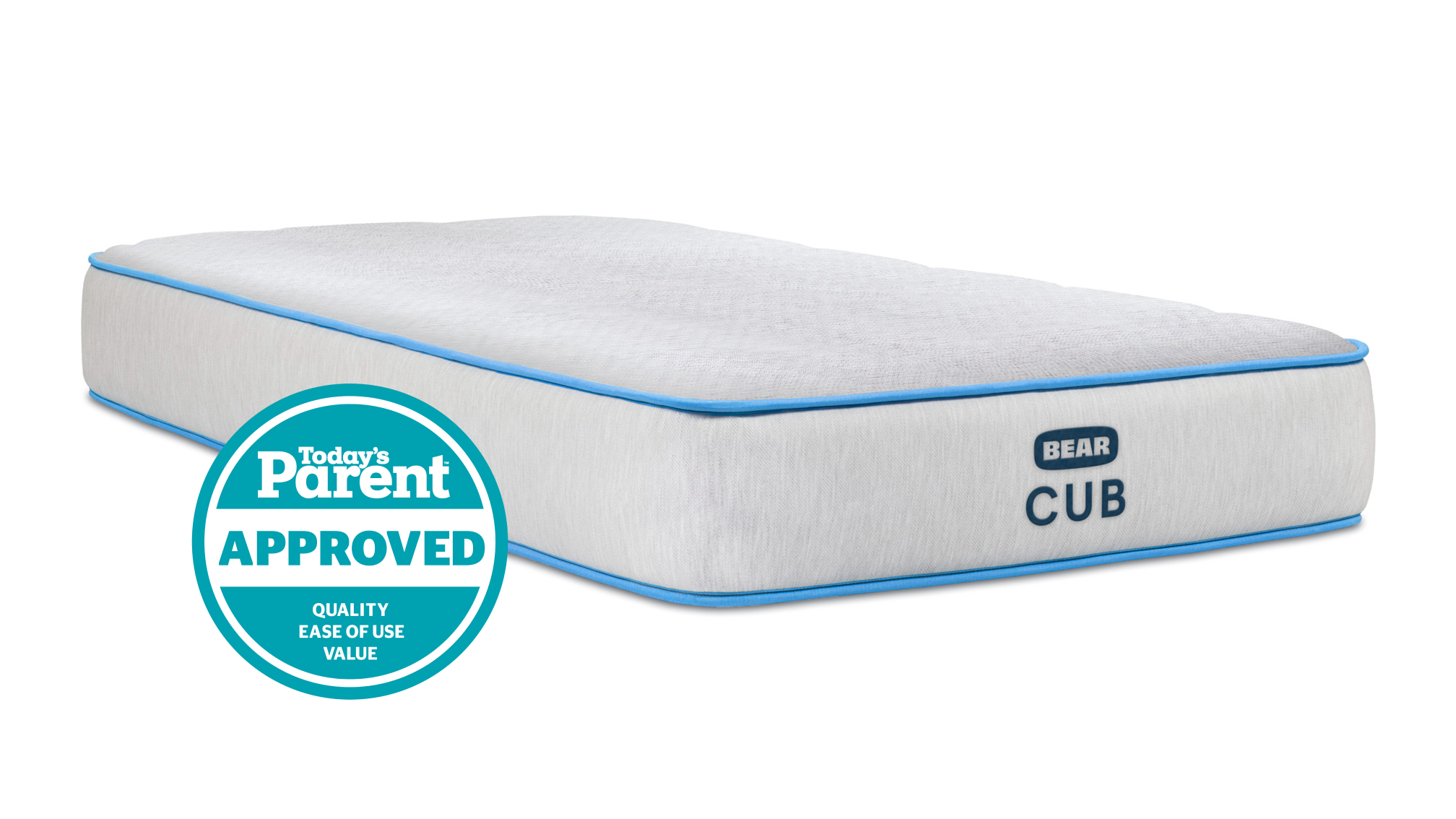
The Parent-Approved Bear Cub Mattress for Kids
If your child is aging out of their old sleep setup, moving into a new bedroom, or just needs a refresh, the Bear Cub may be the perfect fit. Our kids’ mattress was thoughtfully designed to support little ones with a balanced medium-firm (6.8/10) feel that promotes healthy spinal alignment and pressure relief. It’s fiberglass-free, GREENGUARD Gold certified, and made with CertiPUR-US® certified foams, prioritizing safe materials for your child’s bedroom.
 Bear Cub Construction:
- Hypoallergenic cover with Tencel® fibers
- Cool and soothing gel memory foam
- Responsive foam transition layer
- Individually wrapped coils, reinforced edge coils
The foam comfort layers provide gentle cushioning and help absorb motion (great for wiggly sleepers), while the coils below add deep support and durability. Meanwhile, the breathable cover and gel memory foam infusion promote cooler sleep. Built to last through growth spurts and countless bedtime stories, the Bear Cub offers the supportive foundation kids need to rest, recover, and wake up ready for whatever tomorrow brings.
Frequently Asked Questions
How much sleep do kids need?
The Centers for Disease Control gives the following sleep recommendations for each age group:
|
Age Group |
Age Range |
Recommended Hours of Sleep Per Day |
|
Toddler |
1-2 years |
11–14 hours (including naps) |
|
Preschool |
3-5 years |
10–13 hours (including naps) |
|
School Age |
6-12 years |
9–12 hours |
|
Teen |
13-17 years |
8–10 hours |
How thick should a kid’s mattress be?
An 8–12 inch mattress is usually ideal, depending on age and body size.
What type of bed frame does my kid’s mattress need?
You should always check the mattress manufacturer’s recommendations to determine the right fit for a foundation. That said, all mattresses need a sturdy base with a level surface—either solid or with slats spaced close enough to prevent any dips. Mattresses also need ventilation, so the bed frame should elevate the mattress at least slightly to allow airflow. At Bear, we offer cozy upholstered bed frames for kids and floor beds that foster toddler independence.
Disclaimer: Bear does not provide medical advice. All resources on the Bear blog, including this article, are informational only and do not replace professional medical counsel. Talk to your doctor about any health, mental health, or sleep-related issues.