


When shopping for a new mattress, one of the biggest decisions you'll make is how firm you want your bed to feel. While firm mattresses are often associated with better support and spinal alignment, a firmer sleep surface isn't necessarily the best choice for everyone.
The ideal mattress firmness depends on several factors, including your preferred sleep position, body weight, pressure relief needs, and personal comfort preferences. Some sleepers benefit from the stable, supportive feel of a firm mattress, while others need more cushioning to sleep comfortably.
So, is a firm mattress right for you? In this guide, we'll explain what mattress firmness means, explore the benefits of firmer beds, and help you determine which firmness level best suits your individual sleep needs.
If you do decide that a firm mattress is good fit, Bear has you covered! Here's a list of a few "best firm mattress" awards that Bear mattresses have picked up this year.
Best Firm Mattress Picks at Bear
Bear Elite Hybrid Ultra
Available in Soft, Medium, and Firm
- Best Firm Pillow Top Mattress - NapLab (Best Firm Mattress: Our Experts Test 470+ Mattresses)
Bear Elite Hybrid
Available in Soft, Medium, and Firm
- Best Firm Mattress - U.S. News (Feel Solid Support With The 7 Best Firm Mattresses)
- Best Cooling Mattress - Tom's Guide (The Best Firm Mattress 2026: Tested and Approved by Sleep Experts)
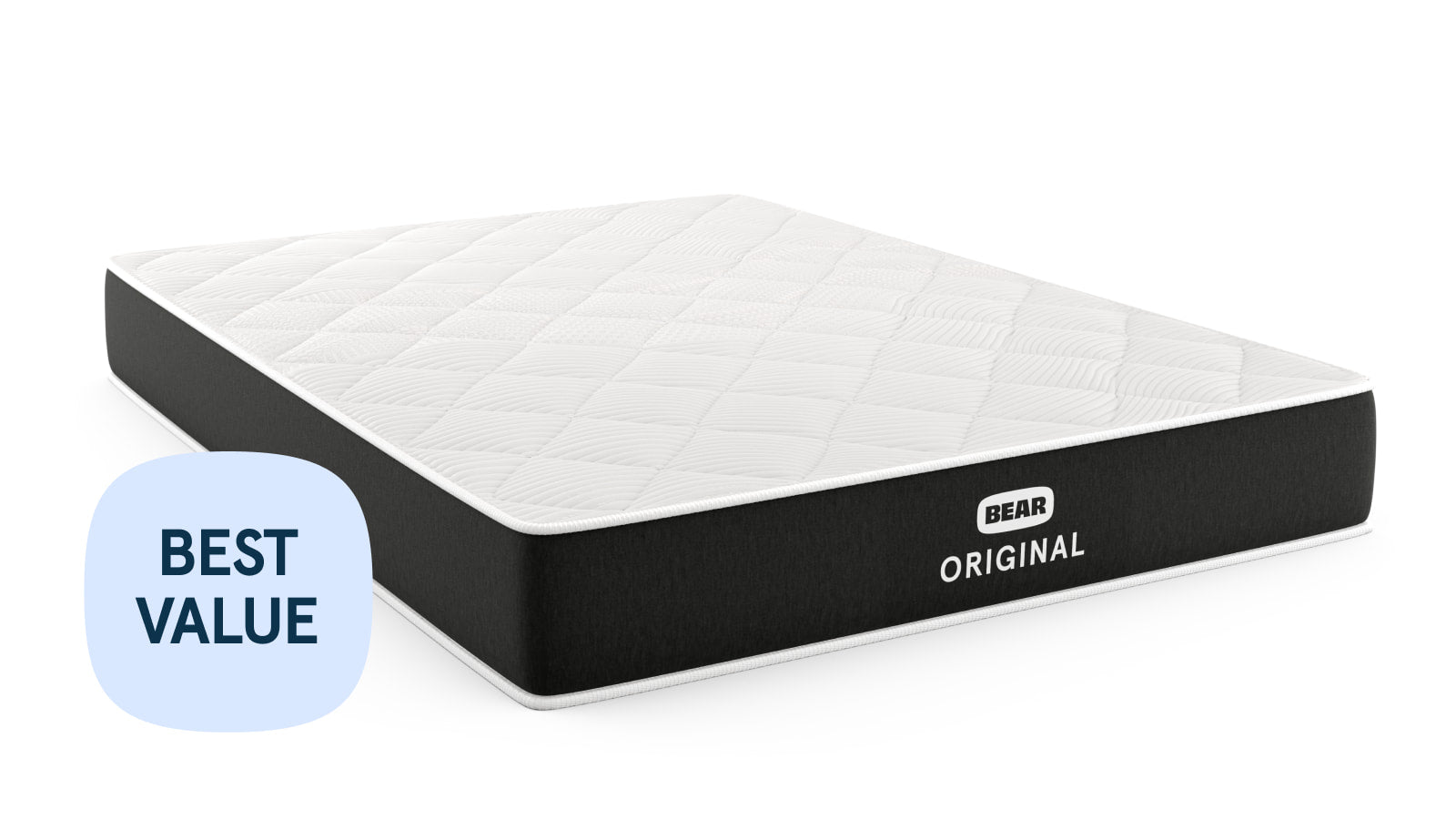
Bear Original
6.5-7/10 Firmness Rating
- Best Value Firm Mattress - NCOA (4 Best Firm Mattresses in 2026)
- Best Firm Memory Foam Mattress - Mattress Nerd (Best Firm Mattresses)
- Best Firm Memory Foam Mattress - Sleepopolis (Best Firm Mattress – Expert-Tested)
- Best Firm Memory Foam Mattress - Sleep Advisor (Best Firm Mattresses (2026))
What Is Considered a Firm Mattress?
Mattress firmness describes how soft or hard a bed feels when you lie down. It's typically measured on a scale of 1 to 10, with 1 being extremely soft and 10 being extremely firm.
Most mattresses fall into one of the following categories:
| Firmness Rating | Firmness Level | General Feel |
|---|---|---|
| 1–2 | Extra Soft | Deep cushioning and substantial sinkage |
| 3–4 | Soft | Plush, contouring comfort |
| 5–6 | Medium | Balanced cushioning and support |
| 6–7 | Medium-Firm | Supportive feel with moderate cushioning |
| 7–8 | Firm | Minimal sinkage and a sturdy sleep surface |
| 9–10 | Extra Firm | Very little cushioning or contouring |
Remember: These ratings are general guidelines rather than universal standards. There's no standardized rating system between mattress brands, and a mattress that feels firm to a lightweight sleeper may feel considerably softer to someone with a higher body weight.
It's also important to understand the difference between mattress firmness and mattress support. Firmness describes how a mattress feels, while support refers to its ability to keep your body properly aligned. A softer mattress can provide excellent support, just as a firm mattress can lack adequate support if its construction doesn't suit your body type and sleep position.
What Are the Benefits of a Firm Mattress?
Firm mattresses can offer several potential advantages, particularly for sleepers who prefer a stable surface with limited sinkage.
Stable Support and Spinal Alignment
One of the primary benefits of a firm mattress is its ability to resist excessive compression under the body's weight. For certain sleepers, this can help keep the hips and midsection from sinking too deeply, supporting a more neutral spinal position.
However, proper alignment requires more than firmness alone. A mattress should also accommodate the body's natural curves without creating uncomfortable pressure points.
Easier Movement and Repositioning
Firm mattresses typically allow sleepers to rest closer to the surface rather than sinking deeply into the comfort layers. This can make it easier to change sleeping positions, roll over, or get out of bed.
Mattress responsiveness also plays an important role. For example, a firm hybrid mattress with responsive foam and coils may facilitate movement more easily than a slow-responding memory foam model.
A More Supportive, On-Top-of-the-Bed Feel
Some sleepers simply prefer the sensation of resting on top of their mattress rather than being enveloped by it.
Firm mattresses generally provide this more substantial, supportive feel, making them appealing to people who dislike deep contouring or the sensation of sinking into their bed.
Who Should Sleep on a Firm Mattress?
While mattress firmness is ultimately a matter of personal preference, certain sleeping positions and body types tend to benefit more from firmer surfaces.
Most Stomach Sleepers
Stomach sleepers are often good candidates for firm mattresses because their sleeping position places considerable pressure on the hips and abdomen.
If the midsection sinks too deeply, it can create an unnatural curve in the lower back. A firmer mattress helps limit this sinkage and maintain more neutral spinal alignment.
For many stomach sleepers, a medium-firm to firm mattress provides an effective balance of support and comfort.
Some Back Sleepers
Back sleepers generally benefit from mattresses that provide stable support beneath the hips and lower back while gently accommodating the spine's natural curves.
Medium-firm to firm mattresses can work well for this position, particularly for sleepers who prefer less sinkage.
However, an excessively firm mattress may leave the lumbar region insufficiently cushioned. The goal is to find a surface that supports the body's weight without creating uncomfortable gaps or pressure points.
Some Heavier Sleepers
Body weight significantly influences how firm a mattress feels. Sleepers with higher body weights typically compress mattress materials more deeply, which can make a medium-firm bed feel softer than expected.
A firmer mattress with a durable support system may help prevent excessive sinkage while maintaining a more stable sleep surface.
However, firmness isn't the only consideration. Heavier sleepers should also evaluate mattress construction, comfort layer thickness, edge support, and overall durability when choosing a bed.
Who Might Prefer a Softer Mattress?
Although firm mattresses offer advantages for certain sleepers, a softer or medium-firm mattress may be more comfortable for others.
- Side Sleepers: Sleeping on your side concentrates body weight around the shoulders and hips. A mattress with sufficient cushioning allows these areas to sink slightly, helping distribute pressure while supporting spinal alignment. An overly firm surface may create uncomfortable pressure buildup.
- Lightweight Sleepers: People with lower body weights often don't compress mattress materials as deeply. As a result, a firm mattress may feel excessively hard and provide insufficient contouring. Softer comfort layers can help these sleepers experience better pressure relief.
- Pressure-Sensitive Sleepers: Anyone who experiences discomfort around prominent pressure points may benefit from additional cushioning. A mattress with softer, pressure-relieving comfort layers can help distribute body weight more evenly.
For many sleepers, a medium or medium-firm mattress offers a practical compromise between cushioning and stable support.
How to Choose the Right Mattress Firmness
Finding your ideal firmness level starts with understanding how different mattresses accommodate your body and sleeping habits. Here are four important factors to consider.
1. Consider Your Primary Sleep Position
Your preferred sleeping position is one of the most useful starting points when choosing mattress firmness.
| Sleep Position | General Firmness Recommendation | Primary Consideration |
|---|---|---|
| Side | Soft to Medium-Firm | Cushioning for shoulders and hips |
| Back | Medium to Firm | Balanced lumbar support and contouring |
| Stomach | Medium-Firm to Firm | Limiting excessive midsection sinkage |
| Combination | Medium to Medium-Firm | Versatile comfort and easy repositioning |
Again, these recommendations are general guidelines. Your ideal firmness may fall outside these ranges depending on your body type and preferences.
2. Factor in Your Body Weight
Your weight affects how deeply you compress a mattress and how its firmness feels.
Lightweight sleepers often prefer softer mattresses because they don't exert as much pressure on the comfort layers. Average-weight sleepers may find medium to medium-firm mattresses comfortable, while heavier sleepers may benefit from firmer surfaces and more robust support systems.
Remember that firmness is subjective. The same mattress can provide a noticeably different sleeping experience for two people with different body weights.
3. Look Beyond Firmness Ratings
A mattress's construction influences how it feels and performs, even when two models share the same firmness rating.
For example, memory foam mattresses often provide close-conforming pressure relief, while hybrid mattresses combine foam comfort layers with supportive coils. Depending on their construction, hybrids may offer a more responsive feel and greater ease of movement.
When comparing mattresses, consider their pressure relief, responsiveness, support systems, and edge stability alongside their advertised firmness levels.
Independent performance testing and customer reviews can also provide valuable perspectives on how different mattresses perform in real-world conditions.
4. Take Advantage of an In-Home Sleep Trial
Even after researching firmness ratings, mattress materials, and customer reviews, there's no substitute for experiencing a mattress yourself.
An in-home sleep trial allows you to evaluate your mattress in your usual sleeping environment over multiple nights. This gives you time to assess its comfort, pressure relief, and support rather than relying on a brief showroom test.
At Bear, we offer a 365-night in-home sleep trial so you can experience your mattress and determine whether its firmness and overall feel are right for you.
Find Your Ideal Firmness With Bear
The best mattress isn't necessarily the softest or firmest option—it's the one that provides the right combination of comfort, pressure relief, and support for your individual needs.
Whether you're a stomach sleeper who prefers a sturdy surface, a side sleeper who needs more cushioning, or a combination sleeper looking for balanced comfort, understanding mattress firmness can help you make a more informed decision.
At Bear, we offer a variety of foam and hybrid mattresses designed to accommodate different sleeping positions, body types, and comfort preferences. Explore our mattress collection, compare firmness levels and construction features, and find the supportive, restorative sleep experience that feels right for you.
Disclaimer: Bear does not provide medical advice. All resources on the Bear blog, including this article, are informational only and do not replace professional medical counsel. Talk to your doctor about any health, mental health, or sleep-related issues.